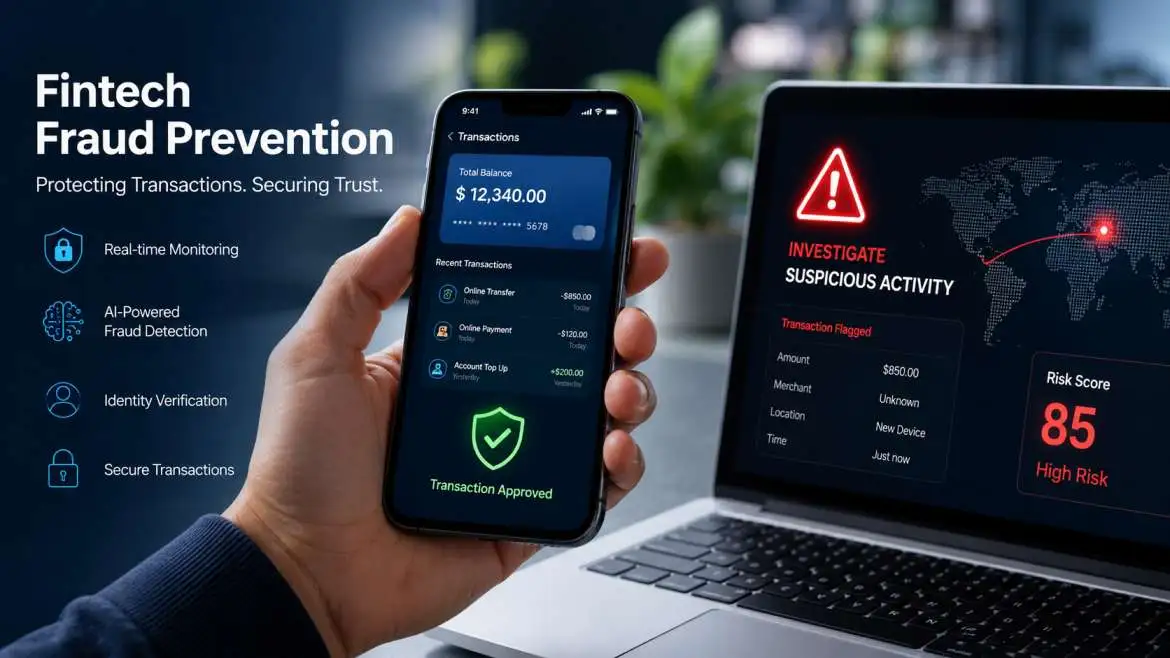
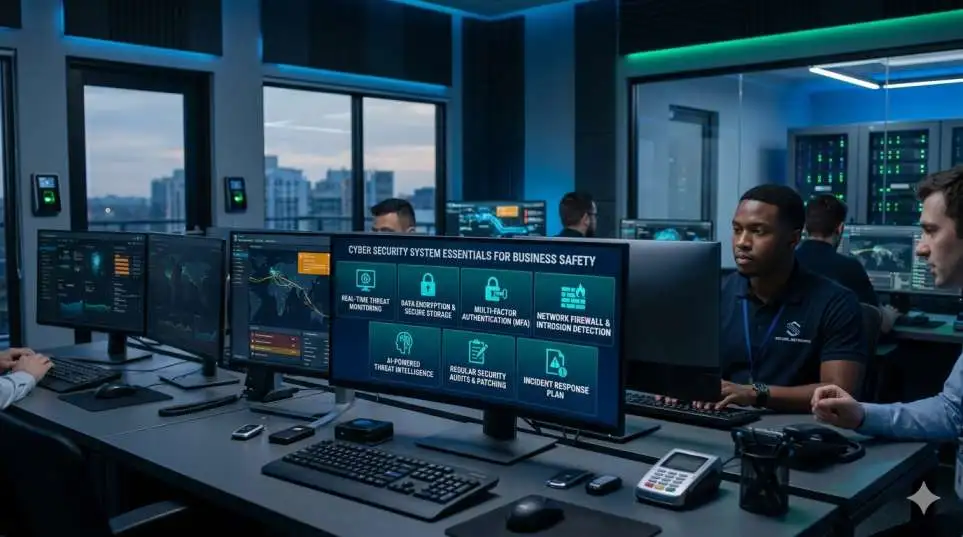
In today's time, our life runs on the internet. We do banking, shopping, office work, and even meeting with doctor online. But this online world also has dangers. Bad people sitting far away can steal our money, our private photos, or our business secrets. To stop these bad people, we need a cyber security system for buisness.
A cyber security system is like a lock on your main door. But this lock is for your computer, mobile phone, and all your online data. It protects your files, your passwords, your customer list, and your bank details. Without this system, you are like a house with open doors in a crowded market.
What is a Cyber Security System?
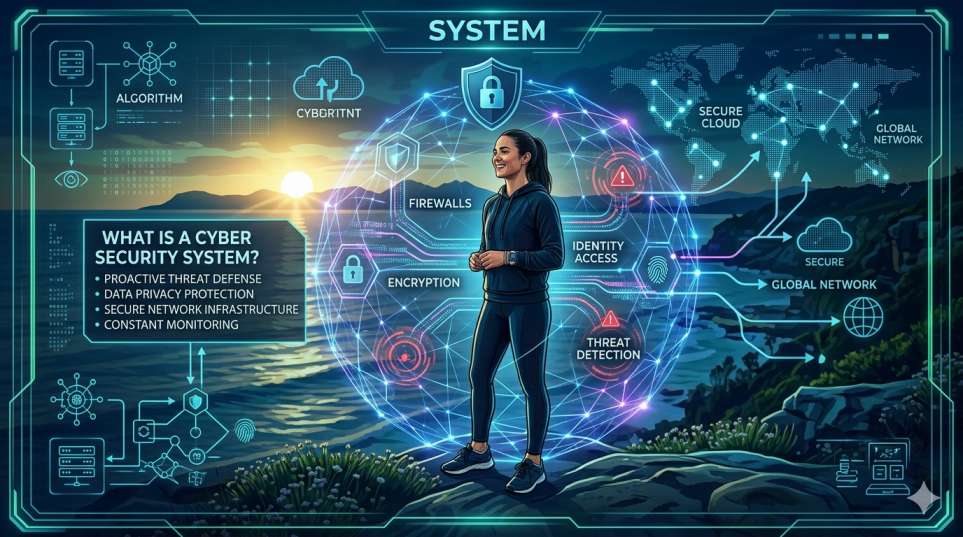
A cyber security system is a set of tools, rules, and practices. You use these to protect your computers, phones, networks, and data from bad people. These bad people are called hackers. They try to break into your system to steal, change, or delete your information.
Think of it like this. You have a shop in the market. You put a lock on the door. You put a camera on the wall. You keep your money in a strong safe. A cyber security system does the same work but for your online world. It puts a lock on your Wi-Fi. It checks every email before you open it. It stops a virus from entering your laptop.
A good cyber security system does not slow down your work. It works quietly in the background. You do not feel it, but it keeps you safe.
You may also read :- Understanding Website Security: Simple Tips to Keep Your Site Safe
Understanding the Types of Cyber Security Systems
There is not just one type of cyber security. Many different types work together to give you full protection. Let me explain the main types of cyber security system in very simple words.
1. Network Security
This is the first line of defence. Your network means your Wi-Fi, your office internet connection, and all the wires and signals that connect your computers. Network security stops bad people from entering your office network. It uses firewalls. A firewall is like a security guard at your office gate. It checks every person coming in. If someone looks suspicious, the guard stops them.
2. Endpoint Security
Your laptop, your desktop computer, your phone, and your tablet are all endpoints. Each of these is a door to your business data. Endpoint security puts protection on every single device. Even if a hacker enters one computer, endpoint security stops them from moving to other computers.
3. Application Security
Applications are the software you use every day. For example, your billing software, your accounting software like Tally, your email software, and your customer management software. Application security means these software programs are made in a safe way. They do not have weak points that hackers can use.
4. Cloud Security
Today many small businesses use cloud services. Cloud means your data is not in your office computer. It is on the internet, on some big company's computer like Google Drive, Microsoft OneDrive, or Dropbox. Cloud security protects this data. It makes sure only you and your allowed people can see it.
Cloud security uses strong passwords and two step verification. Two step verification means when you log in, you also enter a code sent to your mobile phone. This way, even if someone knows your password, they cannot enter without your phone.
5. Data Security and Backup
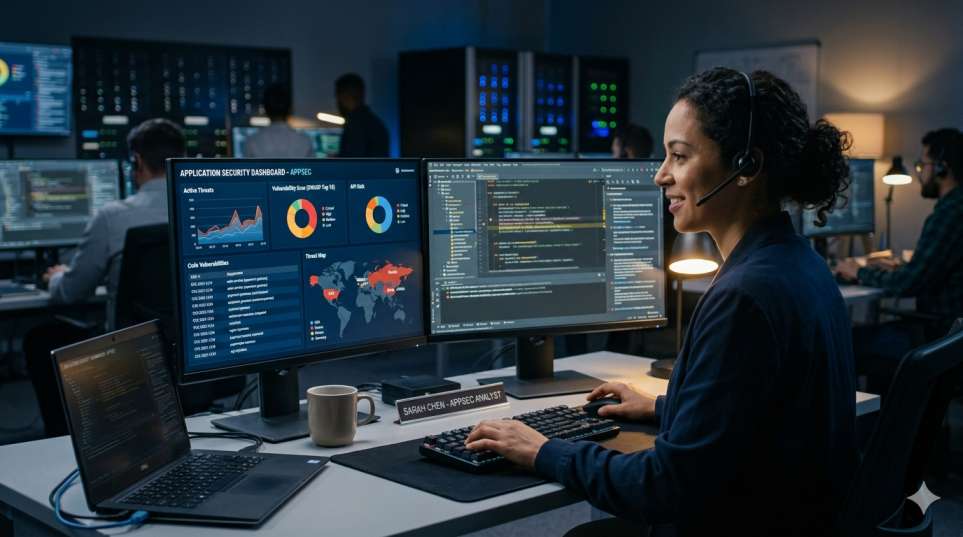
Your data is your most valuable thing. Customer phone numbers, sale records, tax files, bills, and invoices. Data security means this data is kept in a secret form called encryption. Encryption turns your data into a code. Even if a hacker steals it, they cannot read it without a special key.
Backup means you keep a copy of all your data in a separate place. If a hacker locks your computer and asks for money, you do not pay them. You simply clean your computer and put the backup back. This is a very powerful protection.
6. Mobile Security
Many business owners do all their work on mobile phone. They check emails, send bills on WhatsApp, and transfer money using UPI. Mobile security means your phone has a screen lock, no unknown apps, and you do not click on any link sent by unknown numbers.
7. Human Security
This is the most important type. Your computer can be 100 percent safe, but one wrong click by your employee can break everything. Human security means you teach your staff about cyber dangers. You tell them to never share passwords. You train them to spot fake emails. You make a simple rule book for using office computers.
The Importance of Cyber Security for Businesses and Individuals
Now let me tell you why all this matters. The importance of cyber security is not just for big companies. It is for every single person who uses the internet. For a small business owner, good cyber security can save your business from closing down.
I will give you a real example. Last year, a small garment shop in Surat got an email. The email looked like it came from GST department. The shop owner clicked on a link in that email. Within one hour, his entire billing computer stopped working. All his files were locked. The hacker asked for two lakh rupees to unlock it. The shop owner did not have backup. He lost all his sale records of two years. He had to close his shop for fifteen days. This happened because he did not have a cyber security system.
So the importance of cyber security is very clear. It protects your money, your time, your hard work, and your reputation.
5 Key Importance of Cyber Security You Must Know
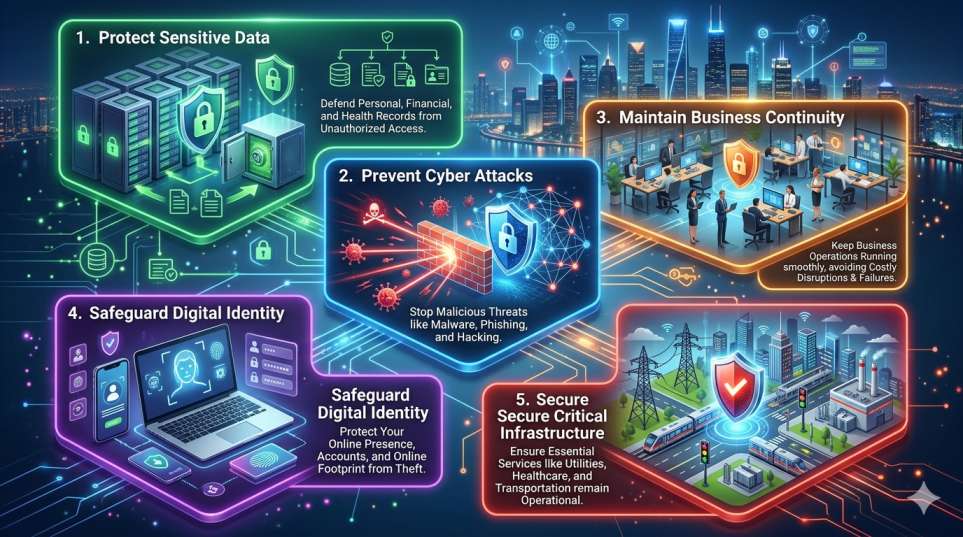
Here are the 5 importance of cyber security that every small business owner in India must know.
1. It Protects Your Money
The first and most direct benefit is money protection. Hackers want your bank details, your UPI codes, and your payment gateway access. With a good cyber security system, your online banking is safe. Your customer payments are safe. Your business account does not get emptied overnight.
Cyber security stops fake payment links. It stops keyloggers. Keylogger is a small program that records every key you press on your keyboard. If a keylogger is in your computer, the hacker gets your password as soon as you type it. A good cyber security system finds and removes these keyloggers.
For a small business, losing even fifty thousand rupees is a big problem. Cyber security keeps that money in your pocket.
2. It Keeps Your Customer Trust
Your customers give you their personal details. Phone number, home address, Aadhaar number, and sometimes even bank details. If a hacker steals these details from your computer, your customer will never trust you again. They will stop buying from you. They will write bad reviews. They may even complain to the police.
Cyber security makes sure your customer data stays secret. This builds long term trust. And trust is the only thing that keeps a small business growing for many years.
3. It Prevents Business Downtime
Downtime means your business stops working. If a virus locks your computer, you cannot make bills. You cannot check stock. You cannot reply to customer messages. Every hour your business is down, you lose money. For a small shop or office, one full day of downtime can mean loss of many orders and many angry customers.
A good cyber security system stops viruses before they enter. It blocks suspicious websites. It checks every file you download. This way your computers keep running every single day without any break. Your business never has to stop because of a cyber attack.
4. It Saves You from Legal Trouble
In India, we have data protection laws. If you keep customer data and a hacker steals it, you can be in legal trouble. The government can fine you. The customer can sue you. Your business license can be questioned.
Cyber security helps you follow the law. It shows that you took proper care to protect customer data. If a breach still happens, you can prove that you had good security in place. This saves you from big fines and court cases. For a small business, a legal case can cost more than the business itself. Better to spend a small amount on security than a big amount on lawyers.
5. It Allows Safe Remote Work
Today many small businesses let employees work from home. Your accountant checks files from home. Your sales person uses office email on personal phone. This is good for work, but it is also a big risk. Home Wi-Fi is not safe. Personal phones do not have office security.
Cyber security makes remote work safe. It creates a secure tunnel between the employee home computer and your office network. This tunnel is called VPN. Even if the employee home Wi-Fi is weak, the tunnel keeps all data secret. Without this security, a hacker sitting in a nearby cafe can easily enter your office system through your employee home connection.
How to Start a Basic Cyber Security System for Your Small Business
First, put a strong password on your Wi-Fi. Do not use your shop name or mobile number as password. Use a mix of letters, numbers, and symbols. Change this password every three months.
Second, install a good anti-virus on every office computer. Free versions are okay for starting, but paid business versions give much better protection. Update this anti-virus every week.
Third, take backup of all your data every evening. Use an external hard disk. Keep this hard disk in a different room. Better to also keep one copy on Google Drive or similar cloud service.
Fourth, teach your staff one simple rule. Never click on any link or attachment in any email unless you are 100 percent sure it is safe. Train them to look at the sender email address carefully. Fake emails often have one wrong letter in the address.
Fifth, keep all software updated. Windows updates, Tally updates, browser updates. Do not postpone updates. Most updates contain fixes for security weak points.
Common Mistakes Small Business Owners Make
Many owners think cyber security is only for big companies. This is mistake number one. Hackers attack small businesses more because small businesses have weak protection.
Second mistake is using the same password everywhere. Many owners use one password for Wi-Fi, for email, for billing software, for bank account. This is very dangerous. If a hacker finds that one password, they enter everything.
Third mistake is no backup. Without backup, a virus or a stolen laptop means permanent loss of data. With backup, you are safe.
Fourth mistake is ignoring mobile phone security. Your phone has your email, your WhatsApp business, your UPI apps. Put a strong lock on your phone. Do not install unknown apps. Do not save passwords in notes app.
Final Words
A cyber security system is not a luxury. It is a need. Just like you lock your shop at night, you must lock your computers and phones. The types of cyber security system are many, but you can start small. Network security, endpoint security, backup, and staff training are enough for most small businesses.
The importance of cyber security cannot be ignored. One small attack can destroy years of hard work. The 5 importance of cyber security I shared above are not just points. They are the five walls that protect your business.
Start today. Do not wait for a problem to happen. Put a good password. Take backup. Update your software. Train your staff. These small steps will save you from big trouble.